
Automate Crypto Trading with a Python-Powered Twitter Bot and Gate.io Signals

This tutorial builds a small crypto signal bot that converts hourly price changes into reviewable social posts. The updated notebook uses a deterministic fixture, current pandas and Tweepy APIs, environment-based credentials, and dry-run publishing by default.
The example is educational and does not provide financial advice. A large price move is an event flag, not a prediction that the market will continue in the same direction.
Create the price fixture
rng = np.random.default_rng(RANDOM_SEED)
timestamps = pd.date_range("2026-07-01", periods=48, freq="h", tz="UTC")
returns = rng.normal(0.0005, 0.012, size=(48, 2))
prices = pd.DataFrame(
    100 * np.exp(np.cumsum(returns, axis=0)),
    index=timestamps,
    columns=["BTC_USDT", "ETH_USDT"],
)
Calculate signals
def create_signals(price_frame, threshold=0.04):
    hourly_returns = price_frame.pct_change()
    stacked = hourly_returns.stack().rename("return_1h").reset_index()
    signals = stacked.loc[stacked["return_1h"].abs().ge(threshold)].copy()
    return signals
The executed fixture produces one threshold event and one dry-run post.
Publish only with explicit opt-in
def publish_signal(message, live=RUN_LIVE_APIS):
    if not live:
        return {"status": "dry-run", "text": message}
    client = tweepy.Client(...)
    return client.create_tweet(text=message)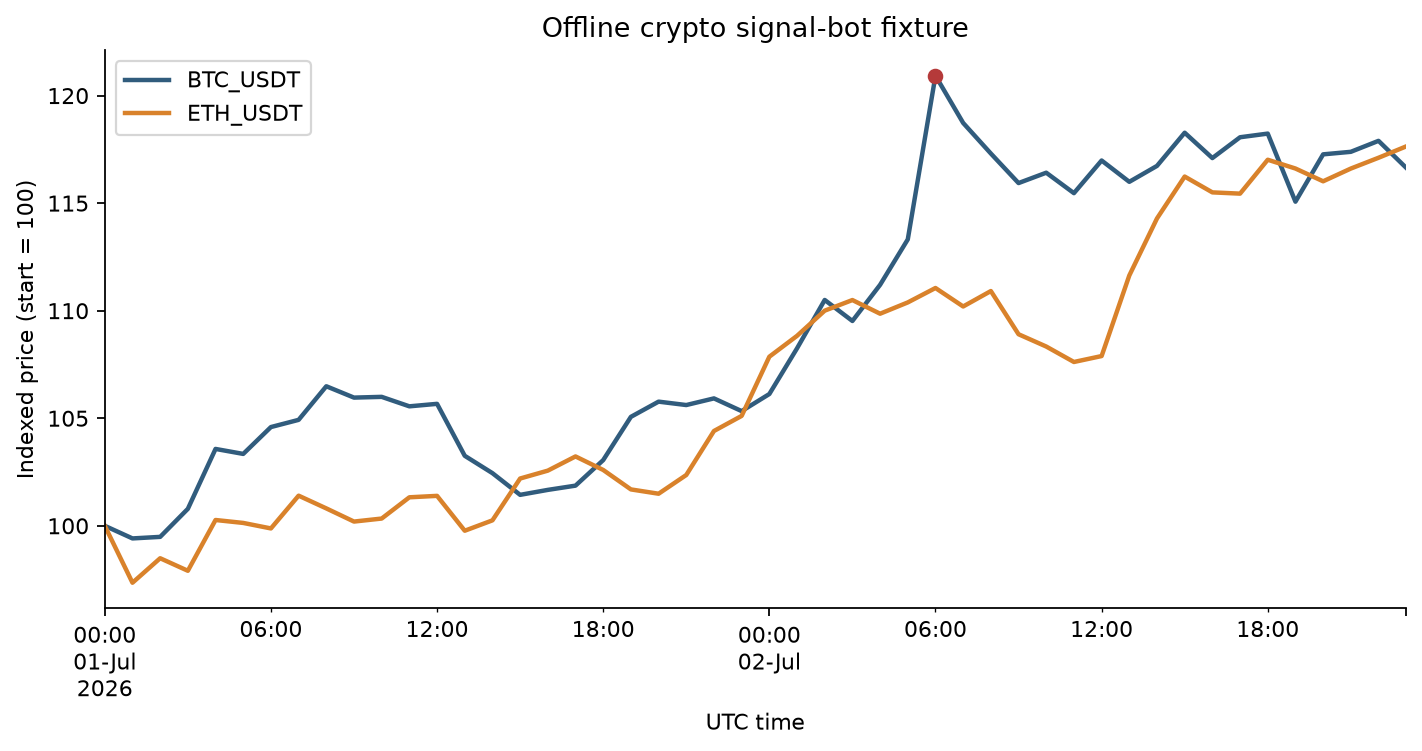
A production bot needs reliable market data, exchange-calendar handling, idempotency, rate-limit controls, observability, human approval, and clear disclosures. Backtest signaling rules with realistic costs before considering any trading application.




1 Commentarchived from the original site